
Fancy
Stronger shadows and effects
The vanilla look, carefully upgraded with shadows, reflections, and better atmosphere.
Choose a preset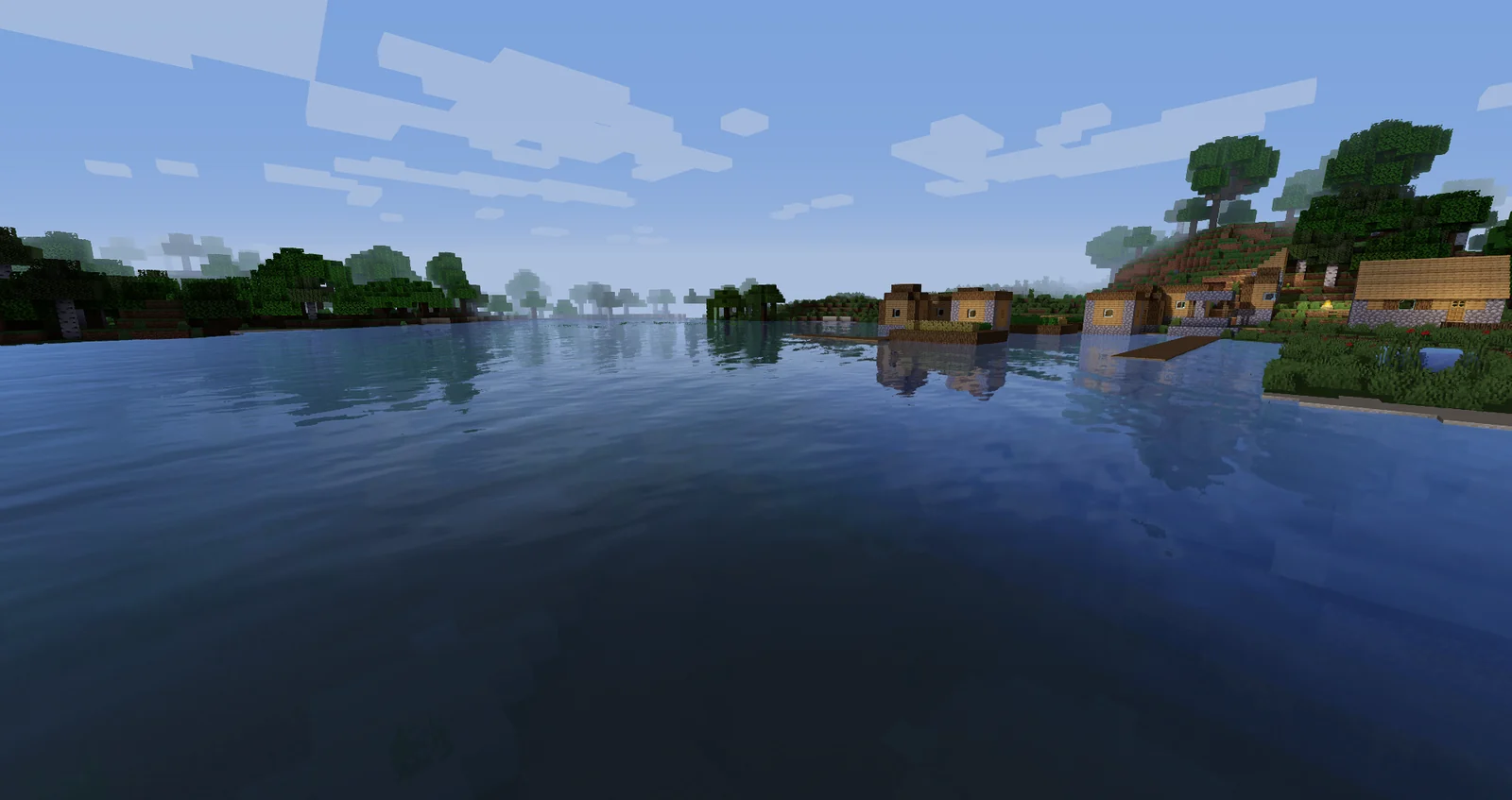
All files below are author-published Modrinth CDN files. The 15-second check shows the exact filename before redirecting.
Stronger shadows and effects
Integrated and entry GPUs
Enhanced Default stays close to Minecraft's original art direction while improving shadows, water, clouds, lighting, and atmosphere. It is the sensible choice when Vibrant feels too stylized.
Best for: Vanilla-style survival, building, multiplayer, and modest hardware that still benefits from a shader loader.
What you need: Minecraft Java Edition with Iris or OptiFine. Choose Fast first for integrated graphics or large view distances.
Sildur's Enhanced Default has a simpler decision: Fast or Fancy. Fast keeps the vanilla-first direction while reducing the cost of shadows and other effects. It is the correct first download for integrated graphics, laptops, long render distances, multiplayer, or modpacks where shaders must share resources with many other systems. Fancy strengthens the visual treatment for players with additional GPU headroom.
Test Fast before Fancy even on capable hardware. This creates a reliable baseline and shows whether Iris, OptiFine, the driver, and the resource pack are working together. If Fast is smooth, switch to Fancy in the same world and compare the places you visit most often. Sildur's Enhanced Default is meant to improve ordinary gameplay, so a familiar base or busy village is a better test than an empty creative world.
Choose this family when Vibrant changes the color and atmosphere more than you want. Sildur's Enhanced Default keeps blocks recognizable, works well with vanilla-style resource packs, and avoids making every scene cinematic. The result is especially useful for building, where material color and shadow readability matter more than bloom or intense volumetric light.
When comparing Sildur's Enhanced Default vs Basic, choose Enhanced Default when vanilla block colors, water readability, and a restrained look matter most. For Distant Horizons, test the same Minecraft, Iris or OptiFine, and distant-renderer versions together; a shader ZIP cannot repair a mismatched setup.
Change one setting category at a time. First lower shadow resolution or shadow quality, because shadows affect a large part of the scene. Next reduce volumetric lighting, clouds, reflections, or ambient effects if the preset exposes them. Finally adjust Minecraft render distance and the distance used by Distant Horizons. Changing everything together may raise FPS, but it prevents you from learning which option caused the slowdown.
Measure performance in the same location, weather, time of day, and camera direction. Let chunks finish loading before comparing results. Average FPS alone is not enough: short stalls while turning, entering a new biome, or looking across water are important. Leave some GPU headroom for chunk uploads, recording software, browsers, and modded interfaces instead of tuning Sildur's Enhanced Default to use every available resource in a quiet scene.
Display resolution has a direct effect on shader workload. A laptop at 2560 x 1600 can be more demanding than a desktop at 1920 x 1080 even when the desktop has a larger monitor. If the selected preset is almost smooth, lowering render scale or resolution may preserve more of its lighting character than disabling several effects separately.
Download one ZIP from the preset list, then open Minecraft through the profile that contains Iris or OptiFine. Open Video Settings and the Shader Packs or Shaders menu, use the button that opens the shaderpacks folder, and move the ZIP into that folder. Do not extract the archive and do not place it in the resourcepacks or mods folder. Return to Minecraft, select Sildur's Enhanced Default, apply it, and allow the world to reload.
When updating from an older release, keep the previous ZIP until version 1.20 has loaded successfully. The two builds can usually remain beside each other because their filenames include versions or presets. Record custom shader options before replacing a build; a rewrite may rename settings or change defaults. Test the update in the same Minecraft profile before using it across multiple instances.
For file verification, select the matching preset in the SHA-512 panel above and compare it with the result from Get-FileHash on Windows or shasum -a 512 on macOS and Linux. A different hash does not automatically prove malware, but it does mean the file is not byte-for-byte identical to the verified release record. Download it again from the listed Modrinth source before installing.
Confirm that the ZIP is directly inside .minecraft/shaderpacks and that Minecraft is running through Iris or OptiFine. An archive nested inside another folder will not appear. The pack also will not show in the resource-pack menu.
Update the GPU driver, match the loader to the exact Minecraft version, and test Sildur's Enhanced Default in a clean profile. Disable other renderer modifications before assuming the ZIP is damaged. Review the current known issues in the changelog.
Test a lighter preset, reduce shadow resolution, and lower render distance. Close overlays and recording tools for comparison. If Minecraft uses integrated graphics instead of the dedicated GPU, correct the operating-system graphics preference first.
Yes, the listed files can be downloaded without payment from the author's Modrinth CDN. Free access does not change the All Rights Reserved license, so the files should not be repackaged or redistributed without permission.
The current release lists Iris as a supported loader. Use an Iris build compatible with your Minecraft version, and test a clean Iris and Sodium profile when another rendering mod causes visual errors.
Yes. Match OptiFine to the exact Minecraft Java version. Vibrant release notes mention that fog can look denser in OptiFine than Iris, and older Minecraft releases may lack newer transparency features.
Current release information lists Distant Horizons and Voxy support. Compatibility still depends on using suitable versions together, and the distant renderer adds its own GPU and memory cost.
No. This ZIP targets Minecraft Java Edition shader loaders. Bedrock uses a different rendering and add-on system, so copying the archive into a Bedrock resource-pack folder will not install it.
Release information checked against Modrinth on September 18, 2026. For older builds, use the project version history on Modrinth.